Archive for April 2013
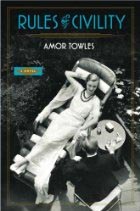
Rules of Civility might sound like an oxymoron today, but author Amor Towles has crafted an engaging novel set in 1938 about social mores that provides plenty to contemplate now.
Katey Kontent (as in the adjective, not the noun) is the narrator whose memory is jarred at an art exhibit in 1966 which takes her back to that one eventful year and the cast of characters who filled it. Katey is a lively, intelligent 25-year-old trying to survive in New York City. A chance encounter on New Year’s Eve 1937 sets the stage for her friendships, romantic relationships, disappointments and her career.
Towles evokes a lively, and noir-ish, portrait of New York City where martinis, jazz and social status dictate. He does so with humor and emotion. Katey works in a secretarial pool in a large financial firm, but her interests lie elsewhere. No sooner is she promoted then she quits to work for an editor past his prime: “He stopped taking on projects and watched with quiet reserve as his authors died off one by one – at peace with the notion that he would join them soon enough in that circle of Elysium reserved for plot and substance and the judicious use of the semicolon.”
Plot and substance are the stuff of Towles writing, which focuses on Katey’s relationship with Tinker Grey, a dashing banker of means. Through Tinker, she has access to upper society, although, as is often the case, appearances in any circle aren’t always what they appear.
Rules of Civility
Four-and-a-half Bookmarks
Penguin Books, 2011
335 pages, which includes The Young George Washington’s Rules of Civility and Decent Behavior in Company and Conversation
A cellar may conjure something dark and musty; fortunately, neither describes the Mona Lisa Wine Cellar. This offspring of The Mona Lisa Fondue Restaurant in the space above features an extensive wine list along with cheese and chocolate fondue.

The super-friendly one-person staff oversees the 10 or 12 tables. Even though the menu is limited, diners still have decisions to make. For example, it’s not just cheese fondue. It’s possibly Old World, New World, South of the Border, Creamy Fontina, Greek Isle, or Brie. We opted for two fondue pots: Old World and Brie. These not only complemented one another, but also were the right amount for our group of four. The Old World is a blend of Emmental and Gruyere cheeses in a white wine base; the Brie, too, was in a white wine base and accented with almonds slivers. Both were gooey with nutty undertones; the Brie was slightly creamier. Bite-size pieces of bread, fresh fruit and raw vegies are served for dipping.

Even if one of my friends was not celebrating a birthday, we were primed for chocolate fondue. Again, a number of choices are available including dark, milk and white. Further flavor profiles are created with the addition of liqueurs. We chose dark chocolate and chocolate with raspberry. Fresh fruit, cookies, marshmallows, pound cake, Angel food cake and brownies are served for dipping.

The beauty of fondue is that it’s communal and requires a slow pace. Add a bottle of wine and the meal is rich in taste and camaraderie.
Mona Lisa Wine Cellar
Four Plates
733 Manitou Ave.
Manitou Springs, CO
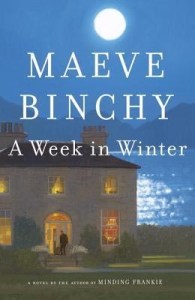
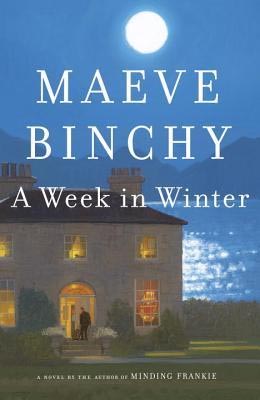
I’m a sucker for a Maeve Binchy novel. Yeah, I know her books are predictable, mushy and fast reads, but she gets me every time. Say what you will, Binchy is a marvelous story teller, and I was saddened to learn she died last summer. A Week in Winter was published posthumously.
Her last work has the requisite characters: independent women who are misled by handsome but unreliable men; ne’er do well young men who, despite the odds, turn their lives around; well-meaning parents who misunderstand their adult children; and, well, many more. For the most part, they are all quite lovely — young and old alike.
Chicky Starr left her family home on Ireland’s west coast as a young twenty-something, only to return some 20-plus years later to renovate an old mansion overlooking the sea as a hotel. Each of the book’s chapters focuses on a different character, while continuing the thread established in getting the hotel ready for guests. Of course, the guests figure prominently in the story. A few names from some of Binchy’s other works find their way into A Week in Winter, which only makes sense: Ireland is not that large a country.
Family relationships, friendships and learning to navigate life are the themes Binchy weaves into her novels; and the Irish landscape is always as important as its inhabitants in her hands.
Binchy has authored 22 books, of which two are nonfiction; I’m glad there are still several I have yet to read.
A Week in Winter
Three-and-a-half Bookmarks
Alfred A. Knopf, 2013
326 pages
I’m not entirely sure how I feel about The Twelve Tribes of Hattie by Ayana Mathis. Mathis has created a family, beginning in 1925 continuing through 1980, of which Hattie is the matriarch. The tribes, her 11 children and one grandchild, are revealed in single, captured episodes (chapters) reflecting a lifetime of longing and emotional neglect. On one hand Hattie is a mother who loves her children too much; yet, she doesn’t love them well.
Parents are not always infallible, and Hattie makes no apologies for her shortcomings. The first chapter, about her twins, and later that of her daughter, Rosie, are told through Hattie’s eyes; the rest of the stories are shared from her children’s perspectives. These include looks back on their childhoods and a glimpse of them as adults. No one fares well, and the question surfaces: how much is a parent’s responsibility? Except that’s not the only issue here.
Hattie and her husband, August, share the burden of poverty and heartache. Their relationship, however, is grounded more in the physical than sentimental realm. Consequently, her nine offspring struggle with everything from sexuality to religion, from addiction to mental illness. How would life had been different if Hattie’s first two children, twins Philadelphia and Jubilee, not died in infancy? It’s possible they would have grown up to be just as miserable as their siblings.
Mathis’s writing is the redeeming element: evocative and haunting. What she writes may be difficult to read, but how she does it is memorable.
The Twelve Tribes of Hattie
Probably Four Bookmarks
Alfred A. Knopf, 2012
243 pages

Luigi’s Homemade Italian Food is practically a cliché when it comes to Italian restaurants. Red-checkered covered tables and hundreds – yes hundreds – of straw-cupped Chianti bottles adorn the walls. Fortunately, the food overshadows the décor.
Luigi’s has been part of Colorado Springs’ dining scene for 55 years. Although that’s much longer than I’ve been eating there, my guess is little has changed. On every visit a line of people wait for tables. This wouldn’t be the case if the food wasn’t worth it.
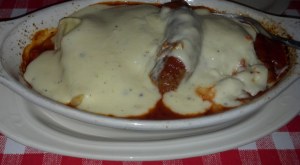
Only open for dinner, the menu features pasta and pizza, with several other options. It would be silly to miss the pasta, especially the homemade manicotti, which is the special Fridays and Saturdays – that just means it’s $13 instead of the regular $16.25. The manicotti are filled with seasoned ricotta, topped with a pungent tomato sauce and rich, creamy béchamel with a suggestion of nutmeg. The dish comes with a choice of meatball or sausage, which are made in-house. I’ve tried them both, but because it’s easier to make meatballs at home, I usually opt for the sausage. Just the right amount of fennel complements the pork. This is a flavorful and abundant plate of food. It comes with a choice of salad or minestrone, and bread.

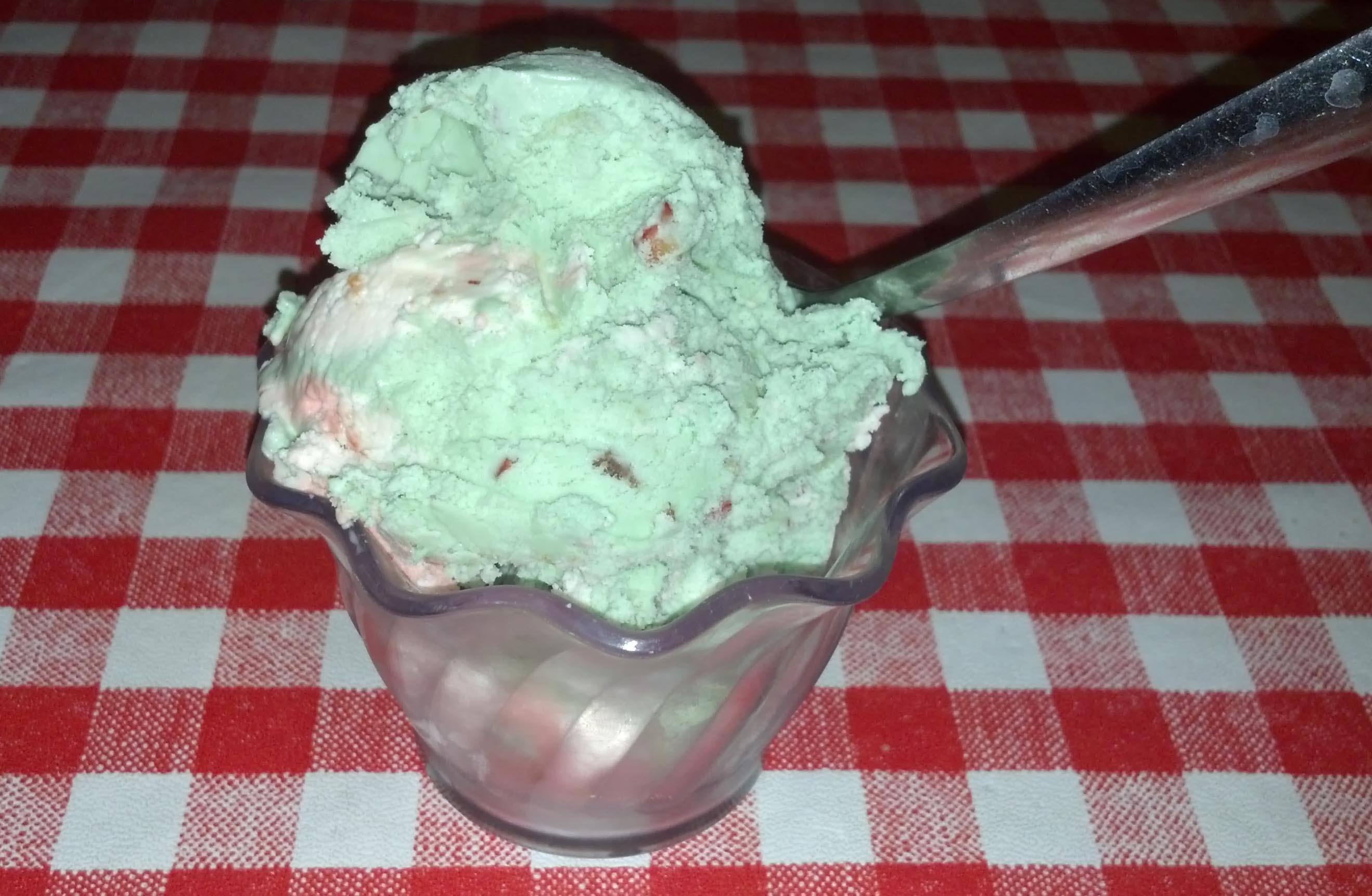
My husband loves Spumoni and ordered a dish of the multi-flavored ice cream. His serving had only pistachio and cherry; it usually includes chocolate or vanilla.
I, like most of the patrons, usually walk out with a container of my leftovers.
Luigi’s
Three- and three-quarters Plates
947 S. Tejon St.
Colorado Springs, CO
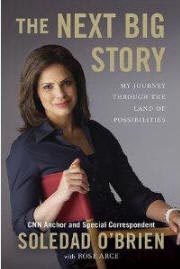
Broadcast journalist Soledad O’Brien’s voice is honest, moving and completely engaging in her memoir, The Next Big Story. I’d expected nothing less than an accurate and fair narrative. It’s also a celebration of opportunities, not just for her as the daughter of a mixed-race marriage, but everyone willing to work hard for the prize. O’Brien acknowledges that for many the ability to make that reach is often riddled with obstacles.
Thanks to the values instilled by her family, O’Brien admits she wasn’t always aware of any impediments. Yes, she is bi-racial, and yes, she grew up in a predominantly white community, but she was never beaten down. This was largely due to her drive to keep up with family expectations.
Much of O’Brien’s story focuses on her journey to become a respected reporter. It wasn’t something she anticipated, but once she discovered journalism she was hooked. She shares her early days of trying, often unsuccessfully, to get meaningful stories on the air. Through hard work, strong friendships and tenacity, she worked her way to anchor weekend news programs locally then nationally. Along the way she married, had children, but continued her quest to share other people’s stories. CNN’s Black in America and Latino in America documentaries are hers, both award-winning works, although she never mentions the accolades.
Most riveting are O’Brien’s accounts of covering such catastrophic events as the tsunami in Indonesia, Hurricane Katrina and the earthquake in Haiti. These are all familiar, but O’Brien’s insider retrospective evokes emotion and suspense.
The Next Big Story
Four Bookmarks
Celebra Books, 2010
321 pages

Normally, ants don’t garner much attention, but one dashing across a table where I’ve just finished eating is disconcerting. Ants are for picnics, not restaurants, except, apparently, at the Stagecoach Inn.
The Stagecoach in Manitou Springs is one of those places I walk or drive past more times than I can count. It has a steady stream of diners coming and going; in the summer, the patio, which faces Manitou Avenue, is always filled. There must be some explanation for its longevity. Yet, it’d been years, many years, since I last ate there; I decided it was time to give it another try.
The unwieldy, Western-themed menu, with photos of the food and brief descriptions, features steaks, chicken and fish. We started with Caesar Salads, full of more withered pieces of Romaine than I like.
I opted for the Black and Bleu Steak, sirloin with a blackened crust, comprised mostly of pepper, sea salt and thyme, then topped with bleu cheese crumbles. I always order medium rare. The dead center of the cut was perfectly cooked, but the rest of the steak was overdone. My husband’s New York Strip was fine and he enjoyed the onion rings as much as I liked the baked potato: more than the meat.

We ordered dessert: bland cherry cobbler topped with mushy oat topping. Then came the ant.
My husband and I jokingly argued whether it was 20 or 25 years since our last visit; we agreed we can wait that long again before returning again – if ever.
Stagecoach Inn
Two Plates
702 Manitou Ave.
Manitou Springs, CO

Satirical, dark, contemporary and poignant are apt descriptions of the 10 short stories by George Saunders, in a collection entitled Tenth of December. Consistent and pleasing, on the other hand, don’t make my list.
Writing in multiple voices, Saunders’s edge dulls by the end of the collection: too much anguish, disappointment and loss. However, “Victory Lap” and “Puppy” tug at the soul. The narrators are very aware of what is missing in their lives. Saunders nails the internal struggles of the main characters. “Victory Lap” features two teens whose inner voices are imaginative, rebellious and forthright – unlike their true personalities. Kyle is a teenage boy grappling with whether or not to come to the aid of his next door neighbor as she’s being abducted. Before the inner struggle ensues, he cops an attitude toward his parents, extreme control freaks. This explains Kyle’s reluctance: his parents are likely to be disappointed at what others will perceive as heroism. Although it may not seem like a likely place for humor to reside, this is a laugh-out loud story. Saunders creates tension and humor effortlessly.
“Puppy” carries that same unlikely combination, but this time with a mother as narrator trying to appease her overindulged children. Spoiled kids, grown kids who make poor choices, parents who make bad decisions and adults knowing they need to do better with their lives are among the characters Saunders creates. They’re not people I want to know. Perhaps therein lies the problem: they are, in fact, all around us.
Tenth of December
Not-quite Four Bookmarks
Random House, 2013
251 pages








 The Blue Page Special