Archive for the ‘Scribner’ Tag

I wasn’t aware of the 1983 Glen Canyon Dam crisis, nor of an effort to achieve the fastest ride through the Grand Canyon until reading The Emerald Mile. Keven Fedarko presents an engrossing, at times lyrical (and occasionally overwhelming) account of the events that led to three men hurtling down the Colorado River in a wooden boat.
Fedarko introduces a cast of characters from John Wesley Powell to park rangers, from boat builders to hydrologists, from river rats to tourists – among others. Historic, meteorological, hydrologic and recreational elements – again, to name a few – are all addressed. Fedarko’s writing is based on thorough research that serves the purpose of illustrating the myriad of components that made the river run possible while addressing aspects that threatened its fulfillment.
The author is a master of the backstory. His writing is much like the river he describes: full of excitement and the unknown, then calm. And, he apparently leaves no stone unturned. Although this is a work of fiction, it has the feel of a mystery: how is Kenton Gura, the man who captained the small, hand-built dory named the Emerald Mile, going to pull off the adventure of a lifetime? This same sense of intrigue is evident in the passages concerning the efforts to thwart a dam failure while dealing with the effects of a massive snow melt: the effect of El Nino.
This work makes me not only want to revisit the Grand Canyon, but also to tour the dams at either end.
The Emerald Mile: The Epic Story of the Fastest Ride in history Through the Heart of the Grand Canyon
Four Bookmarks
Scribner, 2013
415 pages (includes notes and index)
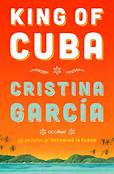
Fidel Castro is never identified by name in Cristina Garcia’s King of Cuba, but it’s easy to fill in that blank. The novel should be entitled The Kings of Cuba because the two main characters share a passion for the island nation and philandering. The difference is that one is a despot and the other an exile: the former in Cuba and the latter in Miami.
Both are nearing the end of their lives. Although El Commandante (also referred to as the tyrant and El Lider) remains vain, he can see his failing body reducing his political power. Goya Herrera wants nothing more than to help the tyrant’s life to a speedy conclusion. Goya’s disdain for the Cuban leader is tied to a lost love and living as an expatriate. It doesn’t matter that Goya’s life has been financially successful.
Alternating between El Commandante and Goya’s voice, other perspectives regarding Cuban history also are included in the form of footnotes. At first, this is annoying – as footnotes usually are. Eventually, they’re entertaining and edifying.
Goya’s family life is in ruins; his wife is deceased and his grown children have few positive attributes. By contrast, the tyrant has progeny he doesn’t even know about. The legacies they will leave behind are entirely shaped by the history they helped create. The tyrant led his country into a revolution that lasted 50 years, and the businessman personifies the American Dream.
Garcia’s disarming narrative combines history with satire, and Castro’s presence is felt on every page.
King of Cuba
Three-and-a-half Bookmarks
Scribner 2013
235 pages

Depending on perspective, the good or bad thing about historical fiction is knowing
how something will end – at least generally. Alice Hoffman’s The Dovekeepers
may have Masada in ancient Israel as its setting, but her novel about four strong,
captivating women is all new. It’s no spoiler to acknowledge that, yes, nearly every-
one dies; nonetheless, Hoffman’s characters are so vibrant and remarkable that
they make their home in our minds and hearts.
Hoffman typically combines the supernatural with the ordinary, but this is the first
time she blends these with history and religion. In her hands, the concepts are not
as incongruous as might be expected. Along with what could be perceived as a little
magic, other attributes shared by the women include survival, desire, love and relig-
ious conviction; these qualities move the fast-paced story toward its inevitable con-
clusion.
Hoffman clearly did her research. Rich with descriptive language of the harsh land,
the brutality of men, and Judaic traditions, Hoffman details the lives of the women
before and after their arrival in Masada. The four, Yael, Revka, Aziza and Shirah,
fill the pages with joy and heartache. They are of various ages, backgrounds, and
experiences; all are intelligent, sensual, even daring characters. Although each wo-
man shares her narrative, the voices are not that distinctly different.
In some ways reminiscent of The Red Tent for its portrayal of women in a Biblical
context, The Dovekeepers is a gripping representation not just about the existence
of faith but of its necessity.
The Dovekeepers
Four-and-a-half Bookmarks
Scribner, 2011
501 pages