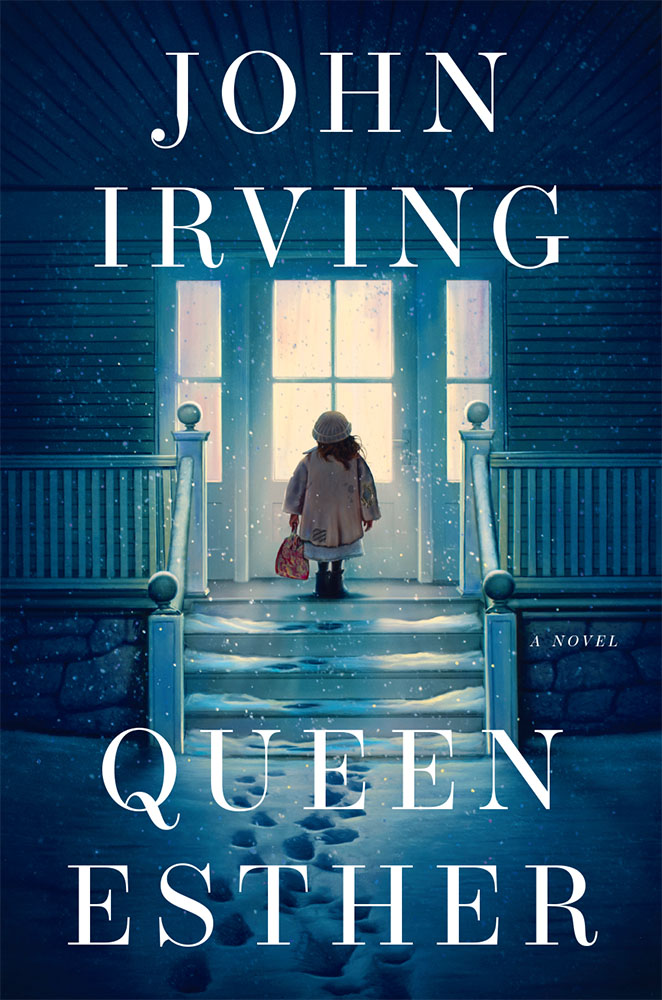
In Queen Esther, John Irving introduces readers to the Winslows of Pennacook, N.H., an intelligent, generous family with five daughters and several adopted caregivers for the girls from St. Cloud’s Orphanage (this may stir memories of an earlier Irving work particularly references to Dr. Larch).
The last adoptee is Esther, a Jewish orphan whose early and continued influence on the family is inexplicable: one of the novel’s shortcomings. When efforts to place her with a Jewish family fail, the Winslows’ aversion to anti-Semitism makes them the most likely candidates.
Through a winding narrative that moves from New Hampshire to Vienna, from Amsterdam to Jerusalem, from the early 1900s to 1981, Jimmy Winslow, the grandson of Thomas and Constance Winslow is the main character more than Esther. Jimmy is reared by the five Winslow sisters; yet, Hope, is the mother of record and Esther gave him birth. She has no direct role in his upbringing but is always a shadow in his life. As a young adult after leaving the Winslows, Esther spends her life searching for her Jewish self; this coincides with Israel’s contemporary political history. She provides Jimmy no tangible attributes – only a lot of questions.
Likeable and earnest, Jimmy grows up to be a writer, eventually a father, but someone whose curiosity about Esther is always a shadow.
As is true with most Irving works, there’s humor and an array of interesting, if not always necessary, characters. The novel is too long with little to redeem its wordiness.
Queen Esther
3.75 Bookmarks
Simon & Schuster, 2025
408 pages + acknowledgements and Reader’s Guide


 The Blue Page Special