Archive for the ‘memoir’ Tag
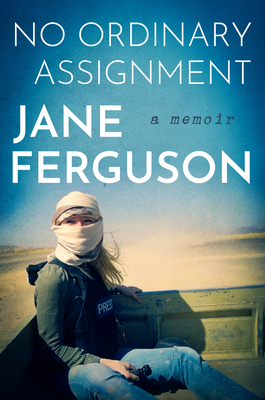
No Ordinary Assignment is Jane Ferguson’s memoir about her career as a war correspondent, primarily in the Middle East.
Ferguson grew up in Northern Ireland where conflict was a constant, so it’s little surprise that later she often put herself on the front lines that led, for example, to Arab Spring, the fall of Kabul and much more. This was initially as a freelance journalist and eventually on staff of Al Jazeera English and PBS.
The work meant leaving her home base, which through the years included Sana, Yemen; Dubai; Kabul; New York City; and others on a moment’s notice. The result tested relationships but allowed Ferguson to prove her abilities at getting the story.
Her experiences were fraught with danger; she was often the first reporter on the scene and usually the only female. She frequently embedded with military forces and was smuggled into several war zones.
Ferguson shares her love of Kabul and the heartbreak of its downfall, not just for herself but the Afghans who were forced to leave – she was among the last Western journalists to evacuate Afghanistan.
At times self-deprecating, Ferguson’s account of becoming an award-winning journalist is compelling, if, albeit, at times repetitive. Not to denigrate her exploits, but it’s difficult to keep track of so many close calls in the face of peril.
It’s evident she sacrificed a lot to pursue her goals. Certainly, she warrants admiration for her tenacity and desire to inform the public about world events that have impactful consequences.
No Ordinary Assignment
Three-and-a-half bookmarks
Mariner Books, 2023
320 pages
Crying in H Mart is Michelle Zauner’s beautifully-written tribute to her mother. The memoir recounts a relationship fraught with cultural and generational differences, but is also filled with love and kindness.
As the daughter of a South Korean woman and Caucasian father, Zauner’s looks often confused people. She was caught between two worlds with her mother only able to help her navigate one. Consequently, Zauner found ways to rebel against her over-protective mother. After graduating from high school in Eugene, Oregon, she moved to Pennsylvania to attend college and stayed after graduating.
The narrative blends the past with the present as Zauner struggles to make a living as a musician in Philadelphia, while working as a waitress to make ends meet. It’s during this time she learns her mother is battling cancer. She puts her life on hold and returns home to help.
The happy memories outweigh the negative ones; as Zauner grows older she understands her mother’s actions were demonstrations of love. And, she recognizes that they have more in common than she’d been willing to admit.
Food is a major source of unity, particularly the Korean dishes her mother (and the relatives in Seoul) prepares. The author’s efforts to learn the recipes, which aren’t written down, are a way for her to reciprocate her mother’s affections.
Rich with humor and tear-inducing accounts, Zauner has crafted an endearing love letter to her late mother. She’s also established herself as a singer and guitarist with the pop band Japanese Breakfast.
Crying in H Mart
Four Bookmarks
Alfred A. Knopf, 2022
239 pages
After watching the HBO series about Julia Child and how she not only elevated American cuisine but also played a significant role in the rise of Public Television, I became interested in Judith Jones.
Jones edited Child’s Mastering the Art of French Cooking. As a fictional work, the TV series played with some facts, not just about the Childs, but also Jones. This led me to her memoir The Tenth Muse: My Life in Food.
Jones grew up in a privileged family where food was given little attention. If not for the family cook, meals would have been completely uninspired. Food was meant to be consumed not talked about. This makes it fascinating to learn about how not only her palate but also her passion evolved.
Jones approach is unassuming and engaging. Yes, she drops names, as in culinary celebrities, but not before she shares her experiences as a college coed in New York City and Paris. The City of Lights is where she met the loves of her life: Evan who she would marry and fine cuisine.
After spending several years in Paris, The Joneses return to New York, where she worked first at Doubleday and later at Knopf. It was there she saved The Diary of Anne Frank from oblivion and made her name as an editor.
Jones recounts her interaction with chefs, her own cooking endeavors and her efforts that helped home cooks move from the bland to the sublime. Jones also includes many recipes in the memoir.
The Tenth Muse: My Life in Food
Four Bookmarks
Anchor Books, 2007
290 pages, includes photos and index
I’ve seen a lot of Stanley Tucci’s movies; of his many screen appearances, my two favorites are Big Night and the television series Searching for Italy. His memoir, Taste: My Life Through Food, reflects both.
Beginning with his childhood and Italian family background, he recalls school lunches, weeknight dinners and holiday get-togethers with equal enthusiasm and vivid descriptions. He also includes occasional recipes.
Tucci moves through the different phases of his life: his early acting days augmented by waiting tables, his relationship and love for his late wife, his success as an actor, remarrying, movie sets and how food is such an integral part of it all.
Humor, mixed with heartfelt emotion, a little snobbery and his enjoyment of a good stiff drink fill the pages. His writing voice is distinct. Its cadence evokes memories of the TV series wherein he visits different parts of Italy identifying the unique foods of each region.
The memoir is not without plenty of name dropping, something Tucci acknowledges. Yes, he’s acted with numerous well-known celebrities, but it’s the many shared meals themselves that breed envy – even if all of the food isn’t delicious … although most of it is.
Tucci isn’t just a dining connoisseur; he recounts his enjoyment of cooking, which includes planning, shopping, preparing and serving. Whether describing the catering on movie sets or meals with his children, parents and wife (or fellow actors and friends), Tucci clearly acknowledges an appreciation not only for good food, but the community it creates.
Taste: My Life Through Food
Four Bookmarks
Gallery Books, 2021
291 Pages
I enjoy reading books about chefs probably because I like food. I’ve never been to Eric Ripert’s Le Bernadin, a three star Michelin rated New York City restaurant, but I have heard of him.
His memoir, 32 Yolks, recounts his childhood in southern France, his first encounters with fine dining and his journey to becoming a renowned chef. Unfortunately, the account lacks personality. It’s bland, More flavoring is needed in the form of humor and descriptions of food lack vibrancy.
As a child, and later young adult, Ripert was happiest when cooking was part of the scene, whether it was in his mother’s, grandmothers’ or a friend’s kitchen. His parents divorced when he was six and his father died soon afterward. In an effort to alleviate her son’s sadness, Ripert’s mother took him to a dinner at an exclusive restaurant. This led to a long-standing friendship with the chef/owner.
Ripert attended culinary school, which he explained, didn’t fully prepare him for what actually takes place in a restaurant kitchen. He had to learn that the hard way.
The title comes from one of his first kitchen duties: to break 32 eggs for a hollandaise sauce. An undertone of self-deprecation comes through in Ripert’s first professional kitchen experiences, yet it rings false. Hard knocks are a way of life, but his memories of working on the line are soft.
Still, learning about how people get to where they are today is of interest.
32 Yolks: From My Mother’s Table to Working the Line
Three Bookmarks
Random House, 2016
247 pages

I’m a Ruth Reichl groupie. I have no idea what I would say if we ever came face-to-face, but it’s fun to imagine feeling like an awkward pre-teen at this point in my life if that were ever to occur.
Save Me the Plums is Reichl’s latest memoir. It focuses on her experiences as editor in chief of Gourmet magazine.
Rather than begin with her first day on the job, Reichl instead invites the reader to share her first memory of the once-iconic magazine. She was eight years old and recalls specific stories that ignited her senses.
Then, in her heyday as dining critic for The New York Times she’s offered the job after meeting with first the editorial director of Conde Nast publications and later Si Newhouse, owner of the publishing conglomerate.
Reichl is initially reluctant. She’s a writer, not a manager, but, obviously, she takes the job. Interspersed with her recollections of the changes made to update Gourmet are a few recipes. Mostly, the narrative follows the magazine’s re-emergence from a stodgy publication out of touch with home cooks to something much more. The focus remained on food, but gives equal attention to quality writing.
It’s fun to read about Reichl’s reactions to having a driver and a clothing allowance. It’s enlightening to learn about the various aspects of putting a magazine together and learning about the people involved. It’s sad to see the efforts by Reichl and her team come to naught as Gourmet ends its days.
Save Me the Plums: My Gourmet Memoir
Four-and-a-half bookmarks
Random House, 2019
266 pages

Becoming, by Michelle Obama, loitered on my nightstand for months; I’d pick it up, read a little and abandon it again. Despite rave reviews from friends who’d read the book, I was initially underwhelmed. I wasn’t interested in her piano lessons and other accounts of her childhood. Yet, I stuck with it and was rewarded with what proved to be an engaging memoir.
During Obama’s time in the spotlight, I was impressed with her friendly, accessible demeanor and forthrightness. I came to appreciate these same attributes in her book. She truly came from humble beginnings. Her close-knit family, personal drive and obvious intellect helped propel her to the popularity she enjoyed as First Lady.
Obama shares her life story moving from those early years (piano lessons included) to her teens, from college to a high-powered legal career, from meeting Barack to becoming a mother. Each of the book’s sections highlights a specific period: “Becoming Me,” “Becoming Us” and “Becoming More.” The latter focuses on her life in the public eye as the wife of the first African American president, her efforts to exceed expectations because of a sense that many wanted the Obamas to fail and her determination to create some semblance of a normal family life for her daughters.
Through an easy-going, almost conversational tone, Obama’s narrative evokes emotion, pride and, at times, dismay. This is about someone you’d like to meet. She’s already invited you into her life through her deeds. The book simply adds an exclamation point.
Becoming
Four-and-a-half Book marks
Crown Books, 2018
426 pages

Fans of Trevor Noah will hear his voice when reading Trevor Noah: Born a Crime. His humor, sensitivity and ability to engage his audience are evident from the first chapter.
Noah recounts his experiences growing up in South Africa. He is the son of black South African woman and a white German father. Interracial relationships were forbidden.
Interspersed with his personal accounts of his childhood and adolescence are explanations of Apartheid. Consequently, Born a Crime not only entertains, but also educates. Hypocrisy and racial discrimination are dominant themes.
Yet, Noah learns to rely on his street smarts. He discovers early that language is a great equalizer. Thanks to his mother, English was the first language he learned. He picked up several others as a child he saw the ways his mother used language to “cross boundaries, handle situations, navigate the world.”
This was not the only important lesson from his mother. She instilled in him the importance of an education even if it took years for him to appreciate its value.
Religion, poverty and domestic violence also are addressed in Noah’s memoir. His mother was religious, to the extreme. His attempts to avoid going to church, which would be an all-day activity on Sundays, were thwarted by his mother’s deep faith.
Noah doesn’t sugarcoat his past, neither as the biracial son born out of wedlock, nor some poor decisions made in an effort to overcome economic injustice. His mother always has his back and her faith in God never wavers.
Trevor Noah: Born a Crime
Stories from a South African Childhood
Four Bookmarks
Speigel & Grau, 2016
304 pages
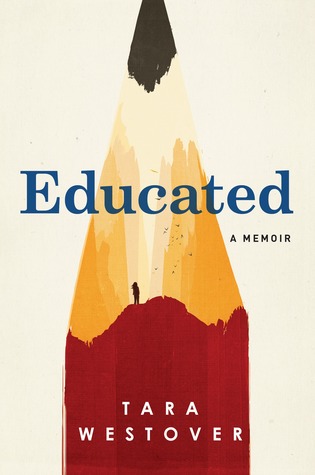
Educated by Tara Westover is one of the most emotionally difficult books I’ve read, but I couldn’t put it down.
The memoir recounts Westover’s journey as the daughter of survivalists in rural Idaho. The government was never to be trusted, neither were doctors or teachers. She never attended school; to say her mother’s efforts at homeschooling fell short is, at best, an understatement. Although hospital care was necessary a few times, the family relied on her mother’s knowledge of herbs.
For much of her life, Westover never questioned her family’s lifestyle. She had no basis for comparison. This isn’t the only aspect making this a challenging book. It was the physical and verbal abuse at the hands of her brother, Shawn. Her parents offered no protection.
Yet, Westover teaches herself how to study and pass the ACT with a score high enough to get accepted into Brigham Young University. From there she studies at Cambridge and Harvard universities, eventually earning a doctorate degree in history from Cambridge.
This is a gritty, heart-breaking narrative and Westover’s self-realization comes with a high price: she must either renounce her education or her family. When she refuses to give in to her parents demands, she is disowned, shunned by her most of her family. Her father’s fervent interpretation of the Bible doesn’t include anything close to acceptance or unconditional love.
Westover’s education extends beyond books and lectures. Her story reflects how much she gained once out of her family’s shadow and what she lost.
Educated
Four-and-a-half Bookmarks
Random House, 2018
322 pages

There is something both intriguing and off-putting about the title of Patricia Lockwood’s memoir, Priestdaddy. Greg, her father was, indeed, a priest in the Catholic Church. This was possible, she writes because her father “snuck past” the rule prohibiting priests from marrying. The real loophole is that a married minister of another denomination can, apparently, seek dispensation from Rome to be ordained as a priest. Pope Benedict XVI approved the request. Father Greg didn’t have to annul his marriage, nor abandon his children. Although, in many ways, as evident in the family stories Lockwood shares, he did.
The author’s tone is humorous and irony is evident throughout. Yet, there is too much cleverness. Her dad’s faith is never depicted as having much depth. Perhaps it is her effort to reveal him as an ordinary, not a holy, man. Even in that regard, he is far from conventional. After all, he lounges around in his boxers and has an extensive (and expensive) guitar collection. In fact he purchases a rare guitar soon after telling his daughter there aren’t funds for her college education.
Despite the title, Lockwood doesn’t focus her attention entirely on her dad. Her mother, her sisters, nieces, nephews and her husband also have prominent places in the narrative. So does a seminarian, who isn’t married and likely does not have kids.
Lockwood is, in fact, a published, award-winning poet. The images and emotions she conveys are vivid, but her often self-mocking tone and airing family laundry quickly wear thin.
Priestdaddy
Three Bookmarks
Riverhead Books, 2017
333 pages



 The Blue Page Special