Archive for the ‘1920s’ Tag
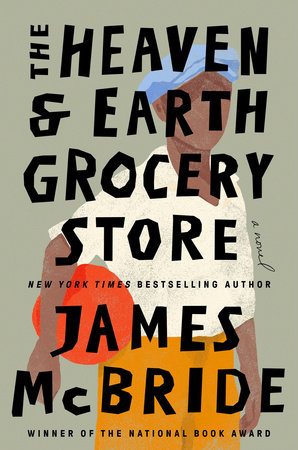
Despite the racism, hardships and wrongs done to the Blacks and Jews who inhabit the landscape of James McBride’s The Heaven and Earth Grocery Store, there is redemption — on numerous levels.
The appropriately-named store is a gathering place for the myriad of immigrants in the Chicken Hill community of Pottstown, Penn. It’s run by Chona, a kind, rabble-rousing Jewess. She’s idolized by her husband Moshe, a Romanian immigrant who runs a successful dance hall. Nate is his Black handyman.
It’s the early-1970s when the remains of a body are found in the neighborhood; the identity keeps readers wondering throughout the novel. The engaging storyline switches to the mid-1920s. The interactions among the Jews, Blacks and whites (who include Klu Klux Klan members) are vividly detailed.
Nate, needs to hide, Dodo, his deaf, orphaned nephew from authorities who want to institutionalize him believing him to be feeble-minded. Chona insists on harboring him in her apartment above the store. While the boy doesn’t hear, he is far from stupid — something Chona recognizes. The two become close and she does what she can to keep safe from the white powers that be.
McBride’s story is rich with characters, although many are one-dimensional; many more — the ones readers will care most about — are multi-faceted. The result is a poignant narrative about people living and working together toward a better life.
Humor and injustice are an odd couple, but here McBride deftly proves them to be a good match here.
The Heaven and Earth Grocery Store
Four-and-a-half Bookmarks
Riverhead Books, 2023
400 pages, includes acknowledgements.

Killers of the Flower Moon: The Osage Murders and the Birth of the FBI is an exhaustive look at a compelling story. Unfortunately, the narrative is bogged down with too many details. While this has all the makings of an excellent series perfect for streaming, as a book it lacks binge-worthiness.
Author David Grann has certainly done his research. He combines two story lines: how the Osage nation in Oklahoma, once among the wealthiest people in the world, lost its fortune; and the early days of the FBI under J. Edgar Hoover.
New to me was the story of the numerous Osage Indians who were murdered as a means of obtaining their oil rights. Grann focuses on the Burkhart family, although many others are mentioned, whose members were either shot or poisoned. Efforts to identify the murderers and press charges were stymied. Evidence was often conveniently misplaced, coroner’s reports were inaccurate and juries in the 1920s were reluctant to convict a white man of murdering an Indian.
Initially, it was believed the death toll rose to 24, which is when the FBI got involved. Grann’s research indicates the number is much higher. Nonetheless, federal agents at Hoover’s directive began an investigation led by Tom White, a former Texas Ranger.
The story deals with double agents, small town politics and grossly unfair treatment of the Osage. American history buffs are sure to find Grann’s work a gripping true-life account. As much as I wanted to be captivated, it didn’t happen for me.
Killers of the Flower Moon: The Osage Murders and the Birth of the FBI
Three bookmarks
Doubleday, 2017
338 pages, including selected bibliography


 The Blue Page Special