
Since 2011, when I started The Blue Page Special, fewer than two dozen books have warranted Five Bookmarks. The list is now available in case you may have missed some of my favorites!
Archive for the ‘Uncategorized’ Category
Check out the new Five Bookmark Books! 2 comments
“Here, There and Everywhere” Leave a comment

I was a 20-year-old college student studying near Florence, Italy, when a friend and I went to Venice for the weekend. Among the first things we noticed when we arrived were the numerous posters announcing a concert that night: Paul McCartney and the Wings in Piazza San Marco.
I don’t remember the cost, but we stood among a throng of young Italians dancing to the music coming from the stage at one end of the square while a light show illuminated the cathedral at the other.
It was The Wings Over the World tour. Yet, between every song, Italians screamed out, in English, requests for Beatles songs.

Nearly 50 years later, I attended McCartney’s Got Back tour. Ticket prices were exorbitant, but we had seats and once again I was among the prevalent demographic.
At 83 years old, McCartney remains a consummate entertainer. He knew what fans had come to hear. He announced that there’d be old songs, new songs and a lot in between. There were!
For more than two-and-a-half hours, the audience danced, sang along and were enthralled by McCartney’s music, reminisces and showmanship. Two large screens projected him and his band members. Another screen at the back of the stage featured images connected to the songs including album covers, old photos and a variety of images related to his past.

Bright lights, lasers and fireworks heightened the energy McCartney exuded from the stage. This was the Got Back tour, but for me it was also a reunion of sorts.
Hospitality Italian style 2 comments
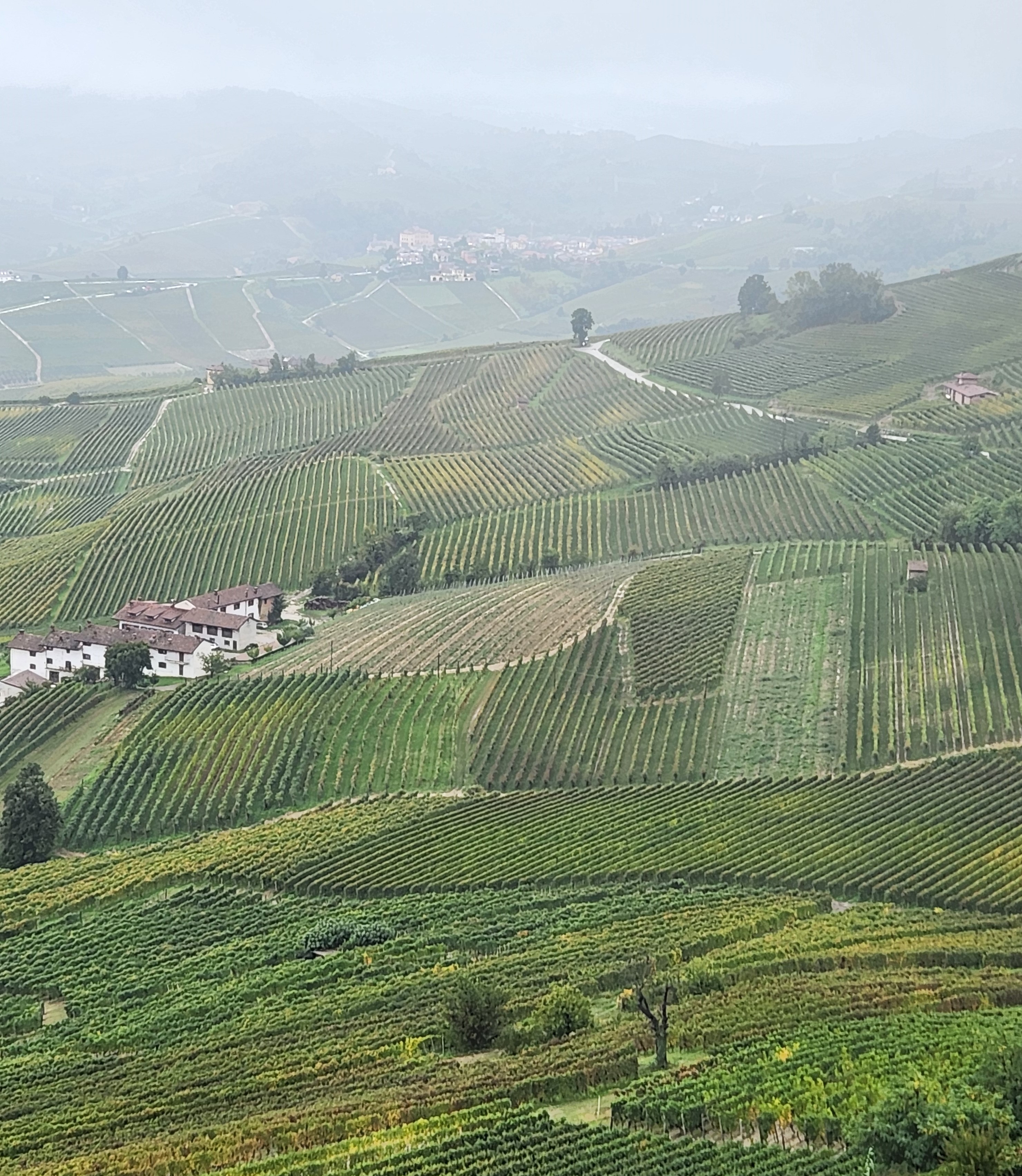
Hiking in Italy’s Piedmont region got off to a mucky start. We spent a rainy day stomping and sliding along trails surrounded by grape-heavy vineyards. Still, the vistas were breathtaking with rolling hills terraced with rows upon rows of grapevines. We were soaked to the bone with so much mud on our boots it felt like walking in high heels on uneven surfaces.

After arriving at our first night’s stay in the hamlet of Vergne, we’d clocked about 10 miles. Arrangements had been made for our bags to be delivered to Ca’ San Ponzio where we had a room for the night. Despite fatigue and a desperate desire/need for a hot shower, this 12-room agriturismo immediately charmed us.
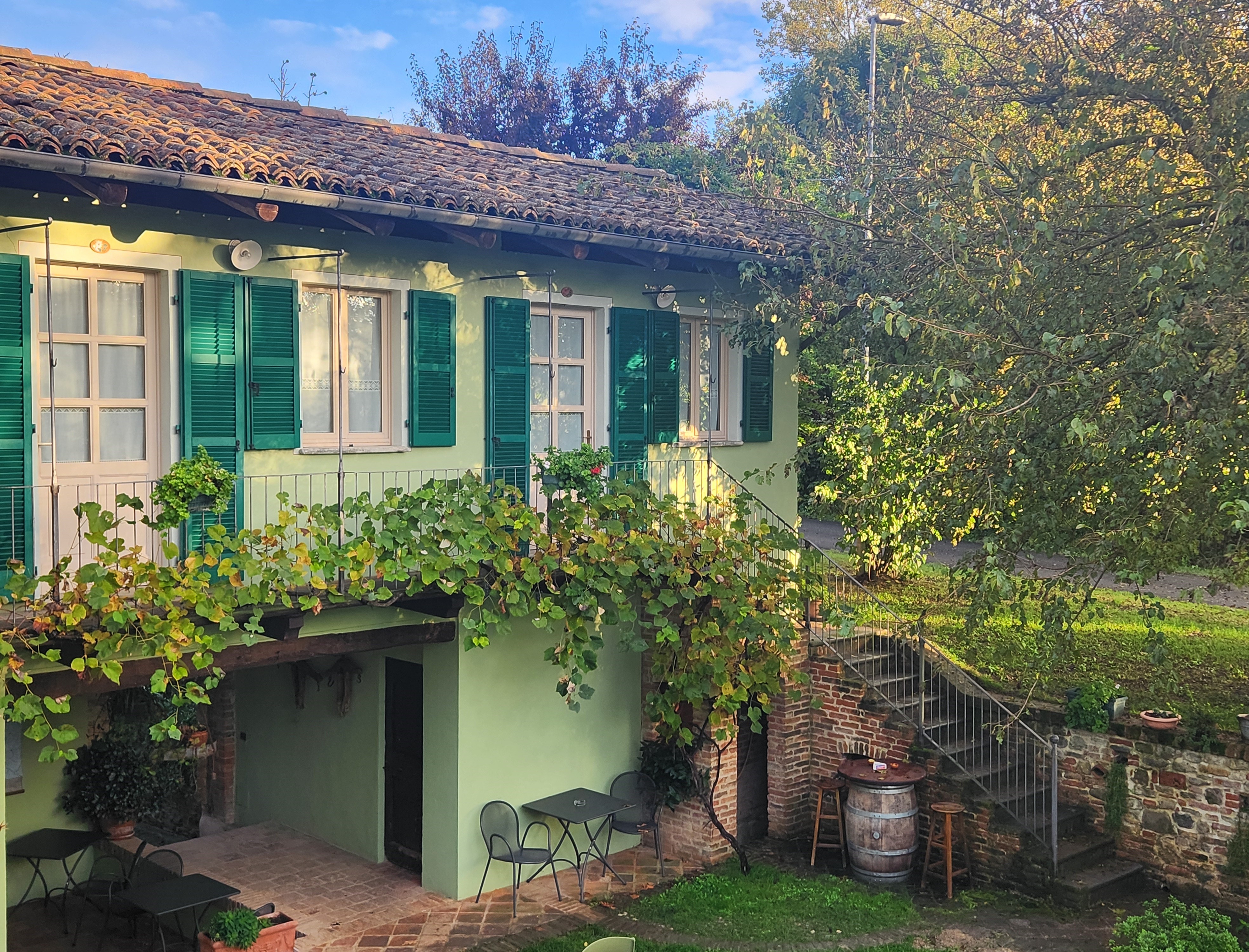
This was the home of owners Luciano and Maurizio’s grandparents; as children they often visited. The brothers renovated the L-shaped building while maintaining its traditional architectural features.

Our warm, spacious room was only part of the charm. A large stone fireplace was the focal point of the inviting living room (lobby doesn’t do it justice). The large dining area – with an impressive breakfast buffet was available in the morning — was another common room for relaxing available, but it was the wine cellar that captivated most guests.
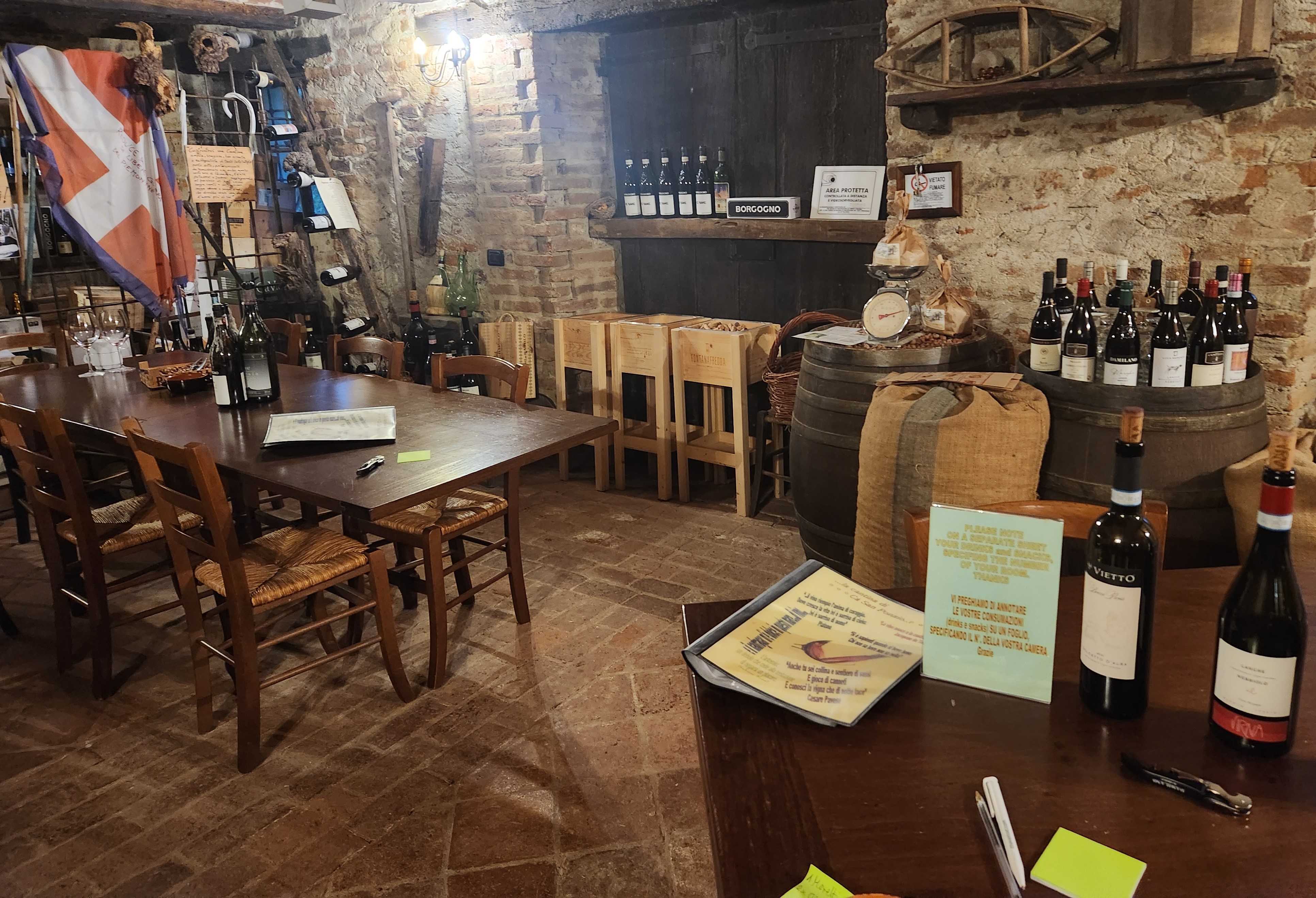
Along with an impressive number and varieties of wine, were bottles, glasses, corkscrews and a stack of Post-it notes. Guests were to help themselves, but needed to jot down their room number and what they’d taken: glass or bottle. This was an honor system everyone happily followed. (With payment for what was drunk made at checkout.)
Bonus: the weather was in our favor the next day.

Ca’ San Ponzio
Five Glasses of wine (this is the rating, not what we drank)
Via Rittane 7, Frazione Vergne, 12060 Barolo, Italy
Food, love and Paris … where else?! Leave a comment

When Ruth Reichl writes about food it’s difficult to keep from drooling; this is intensified in her most recent book: The Paris Novel.
At first, however, the storyline drags. Stella St. Vincent is an unhappy child. Her mother, Celia a New York City bon vivant has little interest in her daughter. Celia refused to tell Stella the identity of her father; consequently, she has no interest in learning anything about him. In short, Stella is boring, prone to maintaining schedules and keeping to herself – having been told throughout her childhood that she should be more open to life.
When Celia dies she leaves Stella an airline ticket to Paris. After a month of living cautiously in the City of Lights she wanders into a second-hand clothing ship. This is where the action picks up thanks to a vintage Dior dress. As slow as the early chapters are, Stella’s transformation to someone willing to embrace the unknown happens too fast. Yes, there are still moments when her reticence surfaces, but suddenly she has a keen, impressive palate and makes friends.
Stella is befriended by Jules, a wealthy octogenarian art collector. She is initially suspicious of his attention, but he has no ulterior motives other than to enjoy her company. He recognizes her appreciation of art, literature and fine cuisine – only the latter was not something she had previously cultivated.
This is a story of finding oneself and not just accepting but embracing the surprises –good and bad – that are part of life.
The Paris Novel
Four Bookmarks
Random House, 2024
272 pages
On the loss of a friend… 6 comments
My mother died last week. In going through some of her papers I found letters I’d written her that she’d saved, along with some cards I made. Among the letters, one, in particular stood out, written when I was 25, which was a long time ago.
While reading it, I was struck by how much of the content had not changed. It was a thank you note, but not for anything materialistic. Rather, I thanked her for the wonderful qualities, ones she, wittingly or not, passed onto me. These included, but definitely weren’t limited to, instilling in me the importance of a sense of humor, independence, sensitivity, and the certainty of her love for me.
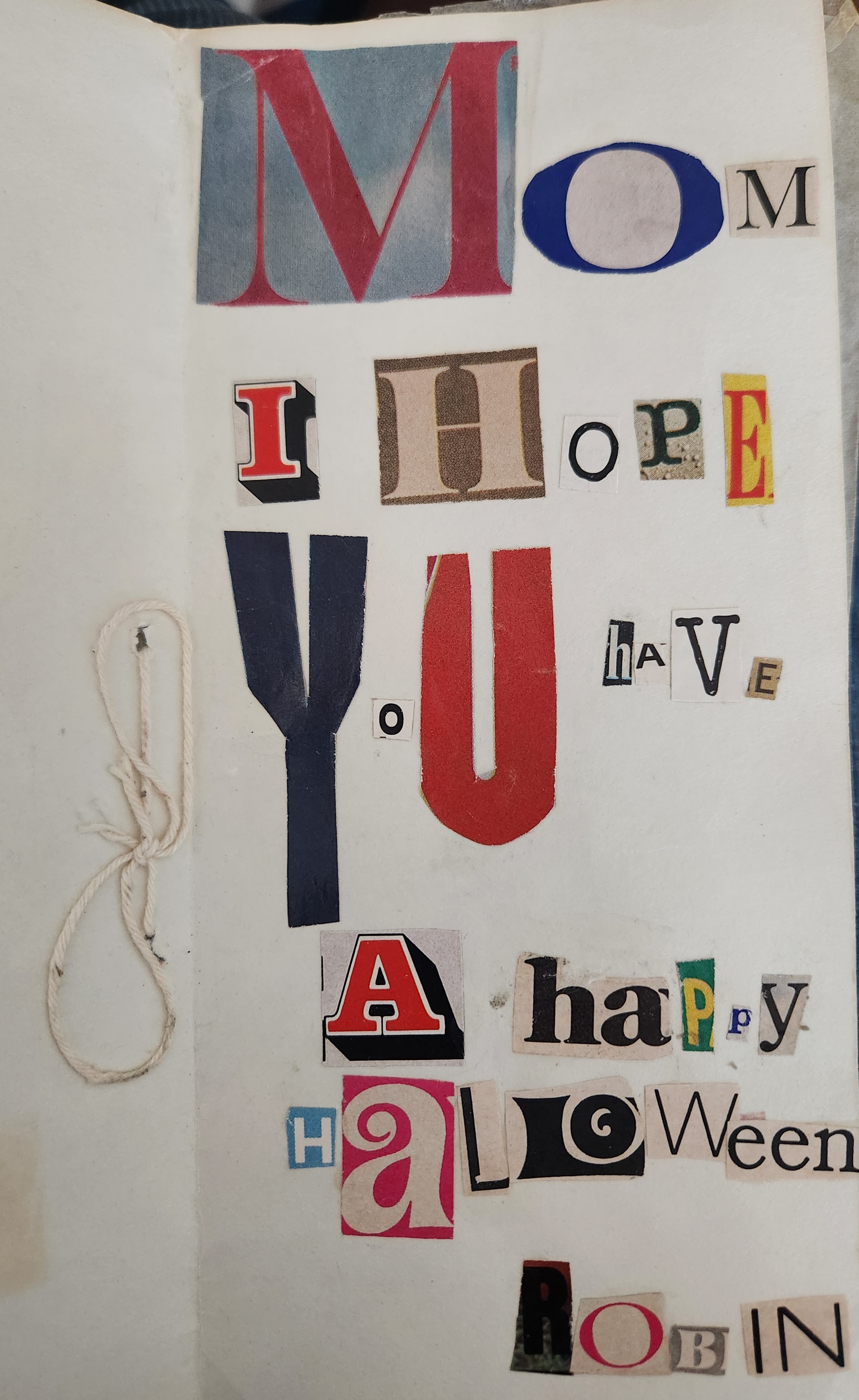
(In looking at the Halloween card I made, I realize she also imparted an appreciation for mysteries.)
My mom was also my closest friend. The only time I recall that not being the case was when I was 13. That age explains it all. Otherwise, we laughed a lot, shared details of our lives once I moved away from home as a young adult and ever since. We spoke by phone almost daily – until about six weeks before she died. Talking on the phone was difficult for her, so the conversations practically ceased. I think that’s when the grieving process started for me.

I was with her when she died. I’m glad that card wasn’t the only time I expressed my appreciation for all she gave me. I’m saddened I can’t keep letting her know.
Progress toward a gender-equal society 2 comments

It’s not an official title for Eliza Reid, but being identified as “the first lady of Iceland” is appropriate. In Secrets of the Sprakkar, Reid writes of the small Nordic island country’s exceptional women and efforts toward a gender-equal world.
Sprakkar is Icelandic for “extraordinary women.” Reid, a Canadian immigrant, recounts how she came to her role as the wife of Iceland’s president. Quite simply, the couple fell in love. They met while studying at Oxford and she returned with him to his homeland where they married.
Iceland is internationally recognized as a leader in closing the gender equality gap. Reid draws on women’s past and present accomplishments. She also interviews the women, including politicians, journalists, entrepreneurs and athletes, among numerous others, who’ve struggled to make significant progress possible.
Besides her role as first lady, Reid is also the co-founder of the Iceland Writers Retreat, an annual event with its beginnings in 2003. She’s the mother of five with a background in journalism. Her subject matter is important enhanced by a conversational writing style.
In the process of learning about the perspectives and experiences of different women, Reid deftly describes the beauty of her adopted country’s varied landscapes, its open-minded people and the many humanitarian policies all of which contribute to increasing awareness of women’s importance in society. Equality is not simply given lip service here; it’s become a way of life. The battle isn’t over, but there’s been enough progress for the rest of the world to take note.
Secrets of the Sprakkar
Four Bookmarks
Sourcebooks, 2022
277 pages, includes acknowledgements, appendices, endnotes and index
A record player, a view and restful sleep Leave a comment
I’ve never reviewed a hotel, inn, Airbnb or other away-from-home accommodation, but The Lincolnville Motel in Maine warrants mention.

Lincolnville is barely a distraction on U.S. Highway 1 and we almost missed the driveways into the motel. I’m glad we didn’t (even though we had reservations).
We were greeted by Alice, the owner, and Lucy, her affectionate Golden Retriever. Along with keys to our retro motel cabin, we received an envelope with house rules and suggestions for nearby attractions, and two sets of earplugs. Alice pointed out the pool, now closed for the season, and led us to the large sitting area lined with shelves of books, board games and record albums.

Our room featured a queen bed, small table with a record player, a globe, small refrigerator and an expansive view across a field leading to the ocean. Unfortunately, the road to the water leads to private property, but the view is public!


Maine in early October gets chilly and our room certainly was. The small wall heater took some time getting up to speed. Due to the chill in the air, we felt like we were camping in a large, exceptionally comfortable tent.
It’s been years since I’ve listened to albums, so it was fun going through the large selection in the common room and taking a few back to our room.

I eventually figured out that the earplugs were provided because of the proximity to the highway. Yet, they weren’t needed. The night’s sleep was certainly peaceful.

Lincolnville Motel
4 Sea View Dr. (aka U.S. Highway 1)
Lincolnville, ME 04849
My 2022 New Year’s Books Resolution! Leave a comment
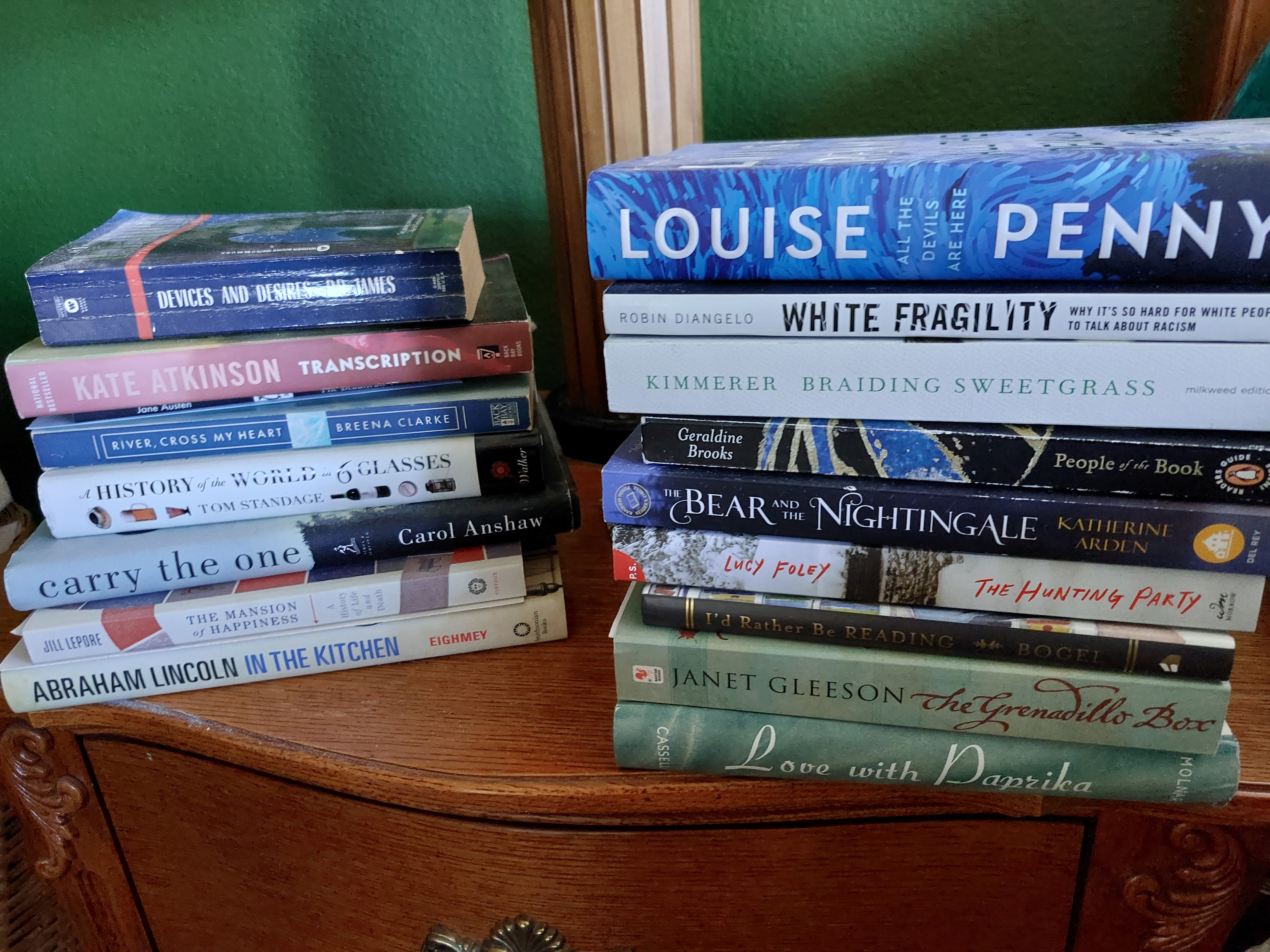
The stacks of books on my nightstand continue to expand without ever reducing in size. I have only myself to blame. After I read reviews or get suggestions I go to the library or borrow from friends. Since those are on loan, usually for a limited time, they get priority. It’s only honorable. Meanwhile, I ignore the languishing towers of titles. Some have been (embarrassingly) around for years.
I resolve to not only dust off these books that lay in wait, but I will read them! (Although, not necessarily in the order they’re stacked.) After which, I’ll finally, and, truthfully thank those who’ve given them to me or appreciate those I purchased for myself – a rare occurrence. My acquaintances at my library will have to wait for my return.
However, there will be exceptions. I may not have the particular ones my book group is slated to read, so I’ll have to move those to the top of the list. This will likely disrupt the resolved intent. It will be temporary, though. Really!
I also feel I should honor the library holds I have. Right now there are three and I’m number 247 for one of them. Though, if someone happens to loan me The Lincoln Highway, I will be compelled to read it immediately – and will remove my name from the library list.
As for reviews that capture my attention, I’ll simply keep a running list. After clearing my nightstand, I’ll happily reinstate my role as an appreciative, loyal public library patron!
Not a Book Review 2 comments

What happens when a close-knit neighborhood loses a cherished resident – especially when it’s a five-year-old child killed in an accident?
What happens now without Aiden? Of course, we carry on; certainly we offer support to his parents – and each other. But my hope is we’ll also share memories with one another and continue to appreciate where we live – and why.
Our community is more than spectacular views, shared streets and intermittent contact. The few we don’t know by name, we recognize and acknowledge with a wave or smile. We know at least a little about one another, often through conversations in the street. Since the first week of June, however, those talks have focused on our grief.
Aiden was a child many of us have known since his birth. Yet, our feelings were more than the collective enjoyment of watching him grow. We embraced his curiosity, smile, friendliness and general joie de vivre. Aiden arrived in yards and driveways ready to engage. Sometimes it was a simple inquiry as to what we were doing; other times he told about recent adventures or to show a newly-unearthed treasure. Topics were never in short supply. He made everyone feel special, instead of the other way around.
His funeral was attended by many from far beyond the boundaries of our ‘hood. Most impressive was the number from down our street and around the corners who gathered to mourn the loss of what might have been, while relishing what he brought to our lives.
Stretching the Strength of Family Ties Leave a comment

Two sisters, two time frames and two stories are the foundation of Liz Moore’s novel Long Bright River. Mickey is the responsible older sister: an introvert, intelligent and a police officer who patrols the Philadelphia neighborhood of her youth. Kacey is outgoing, estranged from Mickey and an addict.
A spate of murders, including in Mickey’s district, results in her search for Kacey who’s gone missing. The narrative alternates between “Then” and “Now”, as told by Mickey. The former is about the sisters as young children living with their embittered grandmother; the latter follows Mickey’s search for Kacey in hopes she isn’t – and doesn’t become – another murder victim.
Even with its taut element of suspense, making this a rapid page turner, it is more than crime fiction. It’s a family love story about stretching the limits of trust. Moore’s writing evokes vivid images of hookers, drug dealers, corner stores and abandoned buildings along the streets of Mickey’s beat.
Equally as gripping is the girls’ past: their close bonds and the events contributing to the choices each makes. Their mother died of a drug overdose and their father abandoned them.
Mickey’s career choice and her reclusive personality inspire little trust among her family or Kacey’s friends. This stymies Mickey’s efforts to find her sister.
The past is not the only obstacle Mickey faces. Circumstances force her to question those with whom she works. Moore injects plenty of surprises leaving the reader to remember there’s always more than one side to a story.
Long Bright River
Four Bookmarks
Riverhead Books, 2020
482 Pages

 The Blue Page Special