Archive for the ‘Books’ Category

After reading the first eight – practically in one sitting – Stephanie Plum
comedy-mysteries, I knew I had to stop. And I did, cold turkey. I’d notice
a new catchy title, or a friend would mention the Morelli/Ranger lines of
division; but I stayed away. Except, for the past six months Smokin’ Seventeen
by Janet Evonovich has been languishing on my nightstand. It doesn’t matter
how it got there, only that I had successfully ignored it, for a while.
A few pages in, I remembered why I had abandoned Stephanie and all the other
whacky characters, the silly repartee and the inane situations. Nothing had
changed. Yet, I kept reading, and as I did, I was hooked. The banter became
less hare-brained: it was laugh out loud funny. I found myself enjoying the
flaws I had identified years ago.
Smokin’ Seventeen once again finds bounty hunger Stephanie in Trenton, N.J.
She remains caught between feelings (the ones that stir certain body parts
and emotions) for Morelli, the good cop, and Ranger, the sexy equivalent of
a bad cop. The story centers around a rash of dead bodies left near the places
Stephanie works and lives. Several corpses have notes addressed to her. The
possibility of a third romantic interest, one who can cook, also appears.
Evanovich is nothing if not prolific and humorous. Explosive Eighteen is now
in bookstores, but I plan on exercising self-control and not reading it any time
soon. Sometimes too much of a good thing gets old fast.
Three Bookmarks
Bantam Books, 2011
308 pages

The trouble with reading Joan Didion’s Blue Nights is that I feel I have
eavesdropped on a private conversation. And it’s one she’s having with
herself.
This is Didion’s most recent work since The Year of Magical Thinking. It,
like Blue Nights, focuses on loss. In the former, it was the death of her
husband, John Gregory Dunne; and in the latter, the death of their daugh-
ter Quintana Roo, also known as Q. These are heart-breaking events but
Didion candidly shares a range of emotions. She writes, “When we talk
about mortality we are talking about our children.” Then, before I can
phrase the question myself, she asks what that means. I am still not sure.
What I do know that is Didion loved her daughter. Q was adopted, an only
child, insightful and perhaps a bit frightening, as a young child, in her
assessment of situations. Didion acknowledges she was not prepared to be
a parent, although it was something she wanted. Nonetheless, much of the
book has her questioning the decisions she made as a mother – something
not necessarily unique.
Surprisingly, the book has a lot of humor, after all who names a child
Quintana Roo (after the state in Mexico)? Didion also addresses the issue
of growing old, of experiencing physical decline. Overall, the strength
lies in her descriptions of those moments that set one family apart from
another: memories. In doing so, she may not be talking to herself as much
as thinking out loud.
Three and a half Bookmarks
Alfred A. Knopf, 2011
188 pages

Feeding Christine by Barbara Chepaitis has most of the themes I enjoy
in a novel: friendship, food, mystery and personal growth. Unfortunately,
the plot and creativity, two fundamental elements for a truly engaging work,
lack flavor.
The book centers around four women who gather to prepare for the annual
holiday party hosted by their catering company. A fifth woman, Nan the
deceased sister of Teresa, is also a prominent character. And, Nan is the
mother of the title character. Rather than hold the party at their shop,
Teresa insists on having it in her home. The story takes place over three
days, but retells memories that span years.
Three of the women spend much of the time cooking in Teresa’s kitchen.
Meanwhile, the fourth is tied up in the basement – and everyone knows
it. I am not making this up. It’s difficult to know if Chepaitis’s intent
was to create a dark comedy, or if that was a consequence of the weak
storyline. Occasional references are made to the “hostage” but each
woman goes about her business. Trips are made to the grocery store,
delicious sounding ginger trout is prepared, love is a topic of conversa-
tion, and all the while someone they care about is secured in the cold,
dark basement. It’s almost comical.
The lone strength of the novel lies in the description of food and its
bond among the women. However, a menu at a nice restaurant could
provide the same thing without the contrived drama.
One Bookmark
Bantam Books, 2000
244 pages

Considering the content of The Slap by Christos Tsiolkas, this book probably warrants an R rating; not
for violence as the title might suggest, but its strong sexual content and graphic language. That aside,
this Australian Literary Society Gold Medal winner is riveting in its cross-cultural, cross-generational look
at parenting, friendship, family and marriage.
Told from eight different perspectives, the story follows the events that lead to and from an adult slapping
the young child of another couple at a family barbecue. It’s a slap felt by everyone related to, or friends
with, hosts Hector and Aisha. The ripple effects go well beyond the afternoon gathering.
Although there are eight different viewpoints, including Hector and Aisha’s, the omniscient narrator remains
the same, and the story moves forward rather than being retold from various angles. This is a clever way to
demonstrate the impact without repeating the actual event multiple times. The slap is never far from the sur-
face, but neither is is it a repetitive action. The ultimate question within the book – and for readers, as
well – becomes which side is right: those who agree with the boy being slapped and those who don’t.
The primary weakness of the novel is the whiney, self-absorbed characters who populate it. With few excep-
tions, it is hard to feel an affinity with any of them. Sure, it was a bratty four-year-old child who was hit,
but some of the other characters might have benefitted from a quick smack, too.
Three and a half Bookmarks
Penguin Books, 2010
482 pages
Cutting For Stone by Abraham Verghese is a 600+ page novel about identity,
familial love and faith (or fate). Set in a missionary hospital in Ethiopia, the
story follows Marion and Shiva Stone, twin boys born to a nun who dies in
childbirth and a British surgeon father who abandons them. Now that’s one head-
turning premise!
Their unlikely birth, the loving physicians who adopt them and the unique bond
of twins share the spotlight with medicine. Marion is the narrator who tells
the story based on his own memories and from what those around him remember.
Chastity and promiscuity are important elements here. They’re bound by love
which means betrayal isn’t far behind. Verghese is a master of description.
His images are vivid and exciting whether of operating rooms or the countryside
of Addis Ababa where most of the story takes place. The story moves easily to
New York City then back to Addis Ababa. The revolution in Ethiopia is part of
the backdrop. Still, the focus is on the staff of the Missing Hospital, a mission
hospital, an appropriately humorous name.
The personality traits of the characters, particularly Marion and Shiva, are
compelling which goes beyond the circumstances of their birth. They are intelli-
gent and full of emotion, yet these twins are remarkably, even painfully,
different. Overall, with few exceptions, these are people we want to get to
know – and, thankfully, do! Don’t be put off by the number of pages; the end
comes all too soon.
Five Bookmarks

667 pages
Vintage Books, 2009
(Full disclosure: I wrote this one a few months ago)
Imagine if the movies 50 First Dates and Groundhog Day meet the book The Curious Incident
of the Dog in the Night Time and you’re close to the idea of The Housekeeper and The Professor
by Yoko Ogawa.This a pleasant story about friendship, familial love, and math – yes math, and
I am not a math person. None of the characters has what could be construed as a birth name: the
professor and the housekeeper are known by those monikers, while the housekeeper’s son is given
the nickname “Root” (which is far less cumbersome than being called the housekeeper’s son). A
fourth character is the professor’s sister-in-law.
The professor suffered a brain injury years before the story begins and lives each day with only
80 minutes of short-term memory. Each day literally, and figuratively, starts anew. To keep himself
from being completely shocked the next day, the professor attaches notes to his suit to help him
keep track of such details as, say, the housekeeper’s existence. In spite of his debilitation, the
professor is a mathematical genius, and he shares his enthusiasm for numbers with the housekeeper
and her son. The three, it turns out, also share a passion for baseball.
Ogawa demonstrates math truly is a language. The characters embrace its nuances and complexities
to master it with grace and apply it to another challenging concept: platonic love. Even so, the
sparse writing is a distraction. That, however, could be more a cultural difference than anything.
Three Bookmarks

180 pages
Picador, 2008
I haven’t fished in years, but I can still appreciate a good fishing story, especially one full of
romance, mystery and, of course, embellishment. Mary Alice Monroe’s Time Is a River reels
in all of the above. Although flawed in many ways (an over-use of adjectives and the abundance of
see-through plot devices, to name just a few), this book falls into the curl-up-in-front-of-the-
ireplace-on-a-snowy-afternoon category. It’s a worthy diversion.
Monroe’s novel follows two stories: that of present day Mia Landan and that of Kate Watson whose
heyday as a fiercely independent woman was in the 1920s. Their lives become entangled through the
not sp subtle motif of fly fishing. Mia is a cancer survivor looking for new direction in her life.
Kate’s memory was tarnished thanks to rumors allowed to flourish through the years. Mia finds herself
in Kate’s old fishing cabin in the mountains of North Carolina and undertakes to solve the circumstances
of Kate’s fall from grace. The narrative unfolds through Kate’s long-forgotten diaries and Mia’s
new-found friendships.
This is a fun story, even if it is stocked with clichés and predictable experiences. Go ahead, let
yourself get hooked.
Three-and-a-half bookmarks

369 pages
Simon & Schuster, 2008
I’ve never read Jeffrey Eugenides’s The Virgin Suicides (although I did see the movie) and I had
difficulty putting down his second book, Middlesex. I was curious about The Marriage Plot, and
my interest paid off.
Unrequited love, mental illness and faith are formidable as individual themes let alone combining
them. In Eugenides’s hands they’re like Legos that fit together perfectly, and colorfully. He’s an
exceptional storyteller. His characters and their conditions in The Marriage Plot emerge through
humor, angst and a variation of the coming-of-age-storyline. Madeleine, Leonard and Mitchell are
compelling characters. They got in my head, if not my heart. Their individual histories and the many
ways the trio intersect are amusing and heartbreaking in only a way life during, and immediately,
after college can be: full of promise and fear – and lots of partying.
Although Eugenides’s syntax is methodical, the evolution of the story is fun and the main personalities
evoke emotion. Madeleine is irresolute, Leonard is damaged and Mitchell is forlorn; in 406 pages
Eugenides provides ample explanation for each character’s strengths and flaws. The title makes
perfect sense from romantic and academic persepctives (Madeleine is, afterall, an English major).
I found something oddly familiar about The Marriage Plot, and it finally hit me that I had already
read two of the chapters in The New Yorker where they appeared as stand-alone short stories.
Those now make much more sense so the small sharp-edged pieces all fit together for me.
Four Bookmarks

406 pages
Farrar, Strauss & Giroux 2011
My interest in crime fiction evolved from a casual guilty pleasure to an outright passion thanks to
Stieg Larsson’s Millennium Trilogy. Unfortunately, there were only three books, so the quest began
for other Swedish titles. A few surfaced, but once my search expanded to other parts of Scandinavia,
the result was a huge score thanks to Jo Nesbo’s The Snowman. I owe my new-found addiction to Scandinavian
crime fiction to the late Larsson, but Nesbo’s writing is what’s making me look behind doors before going
to sleep at night.
The terror he creates in The Snowman is palpable. This Norwegian who-dun-it boasts intelligent characters, a
rapid page-turning plot and vivid, frightening descriptions of a serial killer’s handiwork. Yet Nesbo adeptly
incorporates humor and compassion.
Nesbo offers a disheveled, self-loathing anti-hero, Harry Hole, versus “The Snowman” in a slalom course of twists
and turns. The Snowman targets married women who’ve had affairs and borne the children of those relationships.
The murders always take place during the first snowfall of the season. This along with a snowman and no trace of
the actual crime are hallmarks of the murderer. The quest to find the killer is augmented with numerous characters,
none of whom are superfluous to the story – although a few may seem to be at times. Nesbo’s Harry Hole is flawed
in the way of Columbo, and a would-be misogynist in the tradition of Sherlock Holmes.
Nesbo has eight Harry Holes thrillers on bookshelves. The Snowman is fourth in the series.
400 pages
Knopf 2011

Four Bookmarks
In The Social Animal, David Brooks blends research with fiction to create an
aggregate life situation. The result is a mostly-engaging look at not just how
people live successful lives, but why. The problem is that the book is about 100 pages too long.
Of the 406 pages devoted to the scrutiny to the scrutiny of accomplishment, notes
account for 25. Brooks an op-ed writer for The New York Times, cites
everything from the classics to Wired magazine and everything –
believe me, everything – in between. Harold and Erica are Brooks’s guinea pigs
to which the social and scientific studies are applied. Consequently, the range
of topics includes education, romance, parenting, business, politics and
general lifestyle. In fact, the chapters are a chronological life story.
Starting with dating rituals, Brooks introduces the courtship of Harold’s parents (who
disappear after Harold’s adolescence). References to phemerones and
intellectual capability put a damper on any semblance of romance. Yet, as
Brooks notes, hidden beneath the scientific and cultural references is a
relationship waiting to emerge. Although the book starts with Harold’s parents,
the focus is on Harold then Erica as individuals, and, finally, them as a
couple.
Brooks’s approach to why people are motivated to succeed is intriguing. Because Harold and Erica are,
essentially fictional characters, the author is able to get inside their heads and
remain an objective bystander as he cites the studies and surveys explaining
their behavior. Thus, the most appealing aspect of the composite couple is that
there is something of everyone in these two characters.
Random House 2011
448 pages

3-1/2 Bookmarks
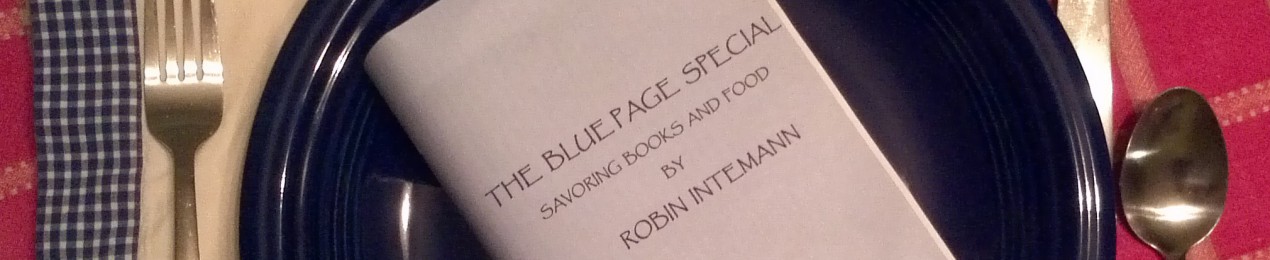



 The Blue Page Special